For most farms, the environmental benefits section offers the clearest starting point: soil and water gains translate directly into lower costs and steadier yields over time. The economic advantages section is more useful for operations already tracking input expenses closely. If labor shortages or community pressure drive your decisions, start with the social and community benefits section instead. The measurement and mistakes sections work best as follow-ups, not entry points. Skip the FAQ until after you have read at least one practical section.
Criteria for Choosing Sustainable Farming Practices
- Measurable yield impact over three seasons
- A practice that cannot show yield stability after three full growing seasons may not fit your crop rotation. Check university extension trial data from within 200 miles of your location, not vendor claims.
- Labor hours per acre during peak weeks
- Sustainable methods often shift labor timing rather than reduce it. Ask a working farm to share time logs for planting, weeding, and harvest under the practice you are considering.
- Upfront cost versus break-even point
- Estimate the full investment, including equipment modifications and soil amendments, then calculate how many seasons it takes to recover that cost through reduced inputs or premium pricing.
- Soil test trends before and after adoption
- At least two years of baseline soil tests are necessary before changing practices. After adoption, test the same fields at the same time of year and compare organic matter, infiltration, and nutrient availability.
- Compatibility with existing equipment
- Some practices require specialized tools that cost more than the practice saves. List every field operation in your current system and verify which pieces of equipment will still work without modification.
- Pest and weed pressure response
- Reduced tillage or cover cropping can either suppress or amplify specific pests depending on your soil type and crop mix. Consult your county extension agent for local pest history before committing.
Benefits of Sustainable Farming Practices
- Environmental Impact
- Improved soil health and biodiversity
- Economic Benefits
- Lower input costs over time
- Social Impact
- Enhanced community engagement and support
- Key Practices
- Crop rotation, cover cropping
- Common Challenges
- Resistance to change and initial costs
- Environmental Impact
- Reduced water usage and improved water quality
- Economic Benefits
- Stable long-term profits
- Social Impact
- Job creation and fair labor practices
- Key Practices
- Integrated pest management
- Common Challenges
- Lack of knowledge about sustainable methods
- Environmental Impact
- Increased resilience to climate change
- Economic Benefits
- Potential for premium pricing on products
- Social Impact
- Strengthened rural economies
- Key Practices
- Agroforestry and permaculture
- Common Challenges
- Mismanagement of resources during transition
- Environmental Impact
- Enhanced ecosystem services
- Economic Benefits
- Reduced dependency on chemical inputs
- Social Impact
- Improved quality of life for farmers
- Key Practices
- Organic farming and regenerative practices
- Common Challenges
- Failure to measure and track progress
- Environmental Impact
- n/d
- Economic Benefits
- n/d
- Social Impact
- n/d
- Key Practices
- n/d
- Common Challenges
- n/d
What Sustainable Farming Actually Means in Practice
Sustainable farming integrates practices that support environmental health, economic profitability, and social equity. The USDA/NRCS defines sustainable agriculture as an approach to farming that meets current food needs without compromising future generations' ability to meet theirs. This definition distinguishes sustainable farming from organic and regenerative methods, which may focus more on specific practices rather than the broader sustainability goals.
Environmental health is achieved by reducing synthetic inputs and building soil organic matter. For instance, minimizing chemical fertilizers and pesticides can enhance soil life and improve water quality. Actions like cover cropping and crop rotation contribute to soil fertility and reduce erosion.
Economic profitability emphasizes diversifying income streams. This can include incorporating value-added products or agro-tourism to stabilize revenue. Sustainable practices often lead to long-term cost savings, but transitioning may require upfront investments in new equipment or practices.
Social equity involves maintaining fair labor conditions. Ensuring fair wages and safe working environments is critical for fostering community support and engagement. Sustainable farms often prioritize these aspects to build strong relationships with their workers and local communities.
These principles create a framework for farmers and landowners to evaluate their practices. Sustainable farming is suitable for those looking to balance productivity with environmental stewardship and community well-being. It presents challenges, including initial costs and the need for ongoing education, but the long-term benefits can significantly outweigh these hurdles. For a deeper understanding of sustainable methods, consider exploring Sustainable Farming Techniques You Should Know.
Environmental Benefits: Soil, Water, and Biodiversity Gains You Can Measure
Sustainable farming practices yield measurable environmental benefits, particularly in soil health, water quality, and biodiversity. These improvements can be quantified through specific metrics, illustrating their effectiveness over time.
Increased soil organic matter is a primary outcome. Long-term studies, such as those conducted by the Rodale Institute, show that practices like cover cropping can lead to significant increases in soil organic matter percentages. For example, fields under sustainable management often demonstrate a 1% increase in organic matter over five years, enhancing soil structure and fertility.
Erosion rates also decrease with sustainable practices. Research indicates that farms implementing no-till methods can reduce soil erosion to less than 1 ton per acre per year, compared to conventional tillage, which may lose up to 5 tons per acre annually. This reduction prevents nutrient loss and maintains soil integrity.
Water infiltration and retention improve as well. Sustainable practices enhance soil porosity, allowing water to penetrate more efficiently. This results in better drought resilience and reduced runoff. Studies have documented increased water retention in sustainably managed fields, with some showing up to a 50% improvement in water holding capacity.
Nitrate runoff is another critical factor. Sustainable farming techniques, such as crop rotation and cover cropping, can lower nitrate leaching into water systems. This not only protects water quality but also contributes to healthier aquatic ecosystems.
Biodiversity gains are evident through documented increases in pollinator and beneficial insect populations. Research from the Sustainable Agriculture Research and Education (SARE) program highlights that farms adopting sustainable practices often see a doubling of pollinator numbers over a five-year period.
These measurable outcomes illustrate the tangible benefits of transitioning to sustainable farming practices. They not only enhance environmental health but also support long-term agricultural productivity. For those considering these methods, it is essential to assess local conditions and practices that align with sustainability goals.
Economic Advantages: Lower Input Costs and Long-Term Profit Stability
Reducing reliance on synthetic fertilizers, pesticides, and fuel can significantly lower per-acre operating costs. For example, farms that shift to organic or regenerative practices often see a decrease in the need for chemical inputs, which can range from 20% to 50% lower than conventional methods. This transition not only conserves resources but also cuts expenses related to purchasing and applying these inputs.
Access to premium markets can further enhance profitability. Products labeled as organic, grass-fed, or non-GMO typically command higher prices. This premium pricing can offset the initial investments required for transitioning to sustainable practices. For instance, organic corn can sell for $6 to $8 per bushel compared to $3 to $4 for conventional corn, providing a substantial financial incentive.
Transitioning to sustainable practices also builds resilience against input price fluctuations. When global markets experience spikes in fertilizer or fuel costs, farms practicing sustainability may be less affected due to their reduced dependency on these inputs. Furthermore, improved soil health leads to better water retention, decreasing the financial risk associated with crop failures during droughts or heavy rains.
The economic landscape during the 3–5 year transition period can be challenging. While initial costs may rise due to investments in new practices and equipment, the long-term benefits often outweigh these early expenditures. Cost savings from lower input use and access to premium markets typically begin to materialize within this timeframe. Evaluating the financial impact requires careful tracking of expenses and yields to ensure that the transition aligns with overall business goals.
Sustainable farming practices can be advantageous for farmers looking to stabilize profits while reducing environmental impacts. Understanding the economics of this transition is crucial for making informed decisions about adopting new methods. For more insights into sustainable methods, explore Sustainable Farming Techniques You Should Know.
Social and Community Benefits: Farm Viability, Labor, and Rural Economies
Sustainable farming practices enhance farm viability for future generations. By prioritizing long-term health, these methods create a stable foundation for farms to thrive economically. When farms adopt sustainable practices, they often see improved resilience against market fluctuations, which is crucial for ensuring that new generations can take over without facing overwhelming financial burdens.
Farmworker safety is another significant benefit. Sustainable practices reduce chemical exposure, contributing to safer working environments. By minimizing pesticide use, farmers protect not only their workers but also their families and communities. This focus on health leads to better quality of life for all involved, reducing healthcare costs associated with pesticide-related illnesses.
Strengthening local food systems is a vital aspect of sustainable farming. Community-supported agriculture (CSA) models connect local farmers directly with consumers, fostering relationships and supporting local economies. These models ensure that farmers receive fair compensation while consumers gain access to fresh, locally-grown produce. This approach not only supports economic stability but also enhances social equity by prioritizing fair labor practices.
Furthermore, sustainable practices can lead to reduced healthcare costs in rural communities. When fewer pesticides are used, the risk of pesticide drift diminishes, which can lower the incidence of health issues among residents. This reduction in health risks contributes to stronger, more resilient rural economies, as healthier communities tend to have better productivity and lower medical expenses.
In summary, the social and community benefits of sustainable farming practices are multifaceted. They ensure farm viability, enhance worker safety, and strengthen local food systems, all while promoting social equity. For those interested in learning more about sustainable methods, reviewing What is Sustainable Farming? Understanding the Basics may provide additional insights.
Key Sustainable Practices That Deliver the Biggest Returns
Cover cropping involves planting specific species to improve soil health. Key benefits include enhanced soil structure and reduced erosion. The implementation difficulty is moderate, as it requires knowledge of species selection and appropriate termination timing. Payback typically occurs within 1–3 years as soil fertility improves.
Crop rotation disrupts pest and disease cycles, leading to healthier crops. It is easy to implement but requires planning to ensure proper sequencing. The payback period is generally short, often within the first year, as it can lead to immediate reductions in pest populations.
Conservation tillage, including no-till practices, saves fuel and improves soil structure by minimizing soil disturbance. The implementation can be challenging, especially for those used to conventional tillage methods. Payback can occur within 2–5 years through reduced fuel costs and improved yields.
Integrated pest management (IPM) uses threshold-based spraying to minimize chemical inputs. This method requires careful monitoring and may be difficult for beginners. However, the financial return can be significant, often seen within the first growing season as pest control costs decrease.
Agroforestry integrates trees into farming systems, providing benefits such as windbreaks and riparian buffers. This practice has a moderate implementation difficulty and can take longer to establish. Payback may begin in 3–7 years as the ecosystem services provided by trees enhance overall farm productivity.
Precision irrigation, including drip systems and soil moisture sensors, optimizes water usage and increases crop yields. The implementation can be complex and may require investment in new technology. Payback typically occurs within 2–4 years through water savings and improved crop performance.
These practices offer substantial returns for those willing to invest time and resources into sustainable methods. Each method's effectiveness depends on specific farm conditions and management skills.
Common Mistakes When Transitioning to Sustainable Farming (And How to Avoid Them)
Transitioning to sustainable farming comes with its challenges. Recognizing common mistakes can help farmers navigate this process more effectively.
One frequent error is converting all acreage at once. A phased transition allows for better management of resources and adaptation. Start by implementing sustainable practices on a smaller portion of the farm, then gradually expand based on observed results.
Another mistake is terminating cover crops too early or too late. Timing is crucial for maximizing benefits like soil health and weed suppression. Monitoring growth stages and local climate conditions can guide the optimal termination timing.
Expecting immediate yield parity during the 2–3 year soil biology rebuild often leads to disappointment. Farmers should prepare for a transitional period where yields may fluctuate. Setting realistic expectations and focusing on long-term soil health can mitigate frustration.
Over-relying on a single practice, such as no-till without incorporating cover crops, can limit effectiveness. A diverse approach, or stacking systems, enhances resilience and productivity. Combining methods tailored to specific farm conditions can yield better results.
Ignoring local extension data and soil tests before changing inputs can lead to misguided decisions. Conducting thorough soil assessments and consulting agricultural extension services can provide valuable insights tailored to local conditions.
Underestimating the learning curve for mechanical weed control is another common pitfall. Farmers should invest time in training and practice to effectively manage weeds without chemical inputs. Utilizing workshops and peer networks can support this learning process.
By avoiding these mistakes and implementing targeted strategies, farmers can navigate the transition to sustainable practices more successfully. For more foundational knowledge, consider reviewing What is Sustainable Farming? Understanding the Basics.
Measuring Success: Metrics and Benchmarks for Sustainable Operations
Tracking progress in sustainable farming requires a structured approach. Utilizing specific metrics can help farmers assess the effectiveness of their practices over time. Here are key metrics to consider:
Soil Organic Matter Testing
Regular soil tests should be conducted annually or biannually to monitor organic matter levels. This metric indicates soil health and fertility, which are critical for sustainable crop production.
Water Infiltration Rate
Testing water infiltration rates can reveal how well soil absorbs moisture. Conduct these tests at least once a year. Improved infiltration rates suggest better soil structure and health.
Input Cost Tracking
Monitoring input costs per bushel or pound helps evaluate economic efficiency. This metric should be tracked annually to determine cost trends and identify potential savings as sustainable practices are adopted.
Beneficial Insect Counts
Counting beneficial insects, such as pollinators and natural pest predators, can provide insights into ecosystem health. Regular counts throughout the growing season can show trends in biodiversity.
Yield Trend Lines
Analyzing yield data over five or more years helps assess the long-term impact of sustainable practices. This trend analysis allows farmers to identify patterns and make informed decisions moving forward.
Simple Table Template
| Metric | Baseline | Year 1 | Year 3 | Year 5 |
|---|---|---|---|---|
| Soil Organic Matter | ||||
| Water Infiltration Rate | ||||
| Input Cost per Bushel/Pound | ||||
| Beneficial Insect Counts | ||||
| Yield Trend Lines |
Farmers can use free tools like the USDA COMET-Farm tool to estimate greenhouse gas emissions and carbon sequestration impacts. This tool can help quantify the environmental benefits of adopting sustainable practices, providing a clearer picture of progress and success.
Establishing these metrics is crucial for farmers aiming to improve sustainability. They offer a practical framework for evaluating both environmental and economic outcomes over time.
Frequently Asked Questions About Sustainable Farming Benefits
Sustainable farming offers numerous advantages. Here are some common questions and answers regarding its benefits.
What are the 10 benefits of sustainable development?
- Improved soil health
- Reduced chemical usage
- Enhanced biodiversity
- Better water management
- Increased resilience to climate change
- Strengthened local economies
- Enhanced food security
- Improved farmworker health and safety
- Conservation of resources
- Long-term economic viability
For a deeper understanding of these benefits, see the section on What is Sustainable Farming? Understanding the Basics.
What are the 10 benefits of organic farming?
- Higher nutrient content in produce
- Reduced exposure to harmful chemicals
- Improved soil fertility
- Biodiversity enhancement
- Lower environmental impact
- Better flavor and quality of food
- Support for local economies
- Promotion of animal welfare
- Increased resilience to pests and diseases
- Sustainable farming practices
For more on this topic, refer to Comparing Organic vs Sustainable Farming: Key Differences.
What are the 3 P's of sustainable agriculture?
The three P's are:
- People: Focus on social equity and community well-being.
- Planet: Emphasis on environmental health and biodiversity.
- Profit: Ensure economic viability for farmers and communities.
What are the pros and cons of sustainable agriculture?
Pros:
- Environmental protection
- Improved health outcomes
- Economic stability
Cons:
- Initial investment costs
- Learning curve for new practices
- Potential yield variability during transition
Understanding both sides can help farmers make informed decisions about adopting sustainable methods. For practical guidance on starting sustainable practices, check out How to Start a Home Garden: A Step-by-Step Guide.
Pros and Cons of Sustainable Farming Practices
- Advantages
- Cover cropping and conservation tillage improve soil structure and reduce erosion, with payback often within 1–5 years.
- Integrated pest management can lower pest control costs within the first growing season by using threshold-based spraying.
- Crop rotation disrupts pest and disease cycles and often cuts pest populations within the first year.
- Precision irrigation reduces water use and supports higher crop yields, with payback typically in 2–4 years.
- Agroforestry adds windbreaks and riparian buffers, and its ecosystem services can boost farm productivity within 3–7 years.
- What doesn't
- Converting all acreage at once makes resource management and adaptation harder than a phased transition.
- Farmers should expect yield fluctuations during the 2–3 year soil biology rebuild instead of immediate yield parity.
- Cover crop termination timing is easy to miss, and cutting too early or too late limits soil health and weed suppression benefits.
- Mechanical weed control has a learning curve that requires training and practice when chemical inputs are reduced.
- Skipping local extension data and soil tests before changing inputs can lead to misguided decisions.
What Suits Whom
If you grow corn, soybeans, or small grains
Choose cover cropping plus conservation tillage. Fuel savings and better yields return the investment within 2–5 years. Start on one field before applying it to the whole farm.
If insect pests are a major production cost
Choose integrated pest management. Threshold-based spraying cuts chemical inputs and can lower pest control costs in the first growing season. Budget time for scouting, because this method may be hard for beginners.
If water is limited or irrigation is expensive
Choose precision irrigation with drip lines or soil moisture sensors. Water savings and stronger crop performance typically pay back the system in 2–4 years. Expect a learning curve with the new technology.
If your land includes streams, slopes, or orchard rows
Choose agroforestry. Windbreaks and riparian buffers improve farm productivity through ecosystem services, with payback starting in 3–7 years. This suits growers who can wait for trees to establish.
If you are transitioning a whole operation
Choose a phased approach instead of converting every acre. Starting with one practice on a smaller area helps you adjust before expanding. Full-acre conversion makes resource management harder.
Before you go
- What are the 10 benefits of sustainable development?
Sustainable development benefits include cleaner air and water, stronger local economies, and more resilient food systems. It also supports long-term land productivity and reduces dependence on finite resources. For farmers, these outcomes translate into lower input costs and more stable growing conditions over time.
- What are the 10 benefits of organic farming?
Organic farming supports soil fertility, reduces synthetic chemical use, and encourages biodiversity on the farm. It also opens access to premium markets and can lower input costs once soil biology stabilizes. The trade-off is often higher labor and a longer transition period before certification.
- What are the 3 P's of sustainable agriculture?
The three P's are people, planet, and profit. People covers farmworker safety and community well-being, planet covers soil and water health, and profit covers economic viability. A practice only counts as sustainable when it holds up across all three.
- What are the pros and cons of sustainable agriculture?
Pros include lower input costs, better soil structure, and reduced environmental harm. Cons include higher upfront investment, a steeper learning curve, and yield variability during the transition. Most of the cons are front-loaded, while the pros compound over multiple seasons.
- How long does it take to see benefits from sustainable farming practices?
Some benefits, like reduced pest control costs from integrated pest management, can appear within the first growing season. Others, like soil organic matter gains and yield stability, typically take two to five years. The timeline depends on the practice, the crop, and the starting condition of the land.
- Does sustainable farming reduce yields compared to conventional methods?
Yields often dip during the first two to three years while soil biology rebuilds. After that, many farms return to comparable or more stable yields, especially in dry years. The biggest yield risk comes from converting too much acreage at once or skipping soil tests before changing inputs.
The Bottom Line: What to Choose
For most corn, soybean, or small grain farms, start with cover cropping plus conservation tillage on one field. This returns investment within 2–5 years and builds soil before scaling up. If insect pests are the main cost, choose integrated pest management first; threshold-based spraying can cut pest control costs in the first season. If water is limited, precision irrigation with soil moisture sensors makes sense. Avoid converting all acreage at once and avoid changing inputs without local soil tests. The transition timeline depends on the practice and starting soil condition. See Sustainable Farming Techniques You Should Know for step-by-step practice details.
Worth a look

Best Gardening Tools for Home Use
Discover the best gardening tools for home use. Find reliable, ergonomic options that make yard and garden maintenance easy for beginners.

Home Gardening Ideas for Every Season
Discover practical home gardening ideas for every season to enhance your small garden and grow healthy plants with ease.

Protecting Yourself from ATM Skimming: Personal Insights
A Florida man paid $480 for cloned cards and Monero. The ATM camera, bank logs, and KYC exchange records ended his run in 15 days.
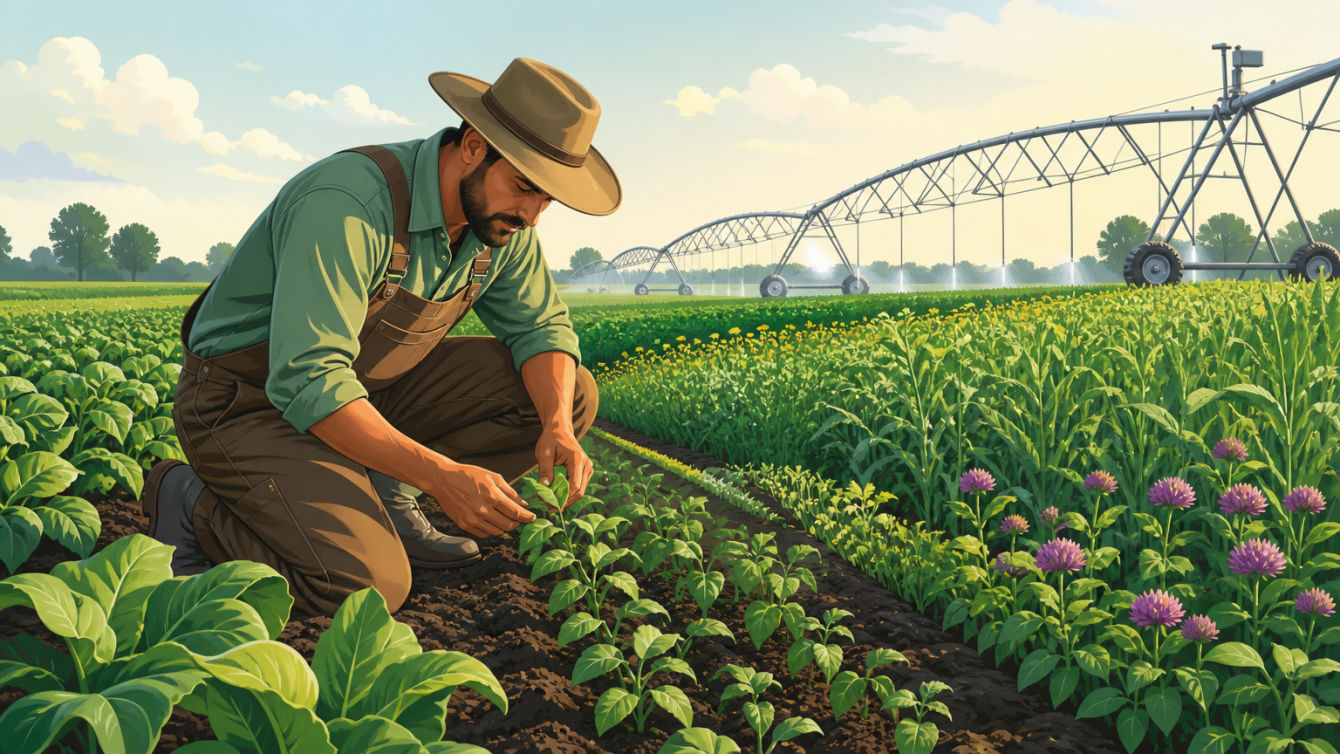
What is Sustainable Farming? Understanding the Basics
Discover what sustainable farming is and how it benefits the environment, communities, and food systems for a healthier future.